
What Is a Delaware Statutory Trust?
A Delaware Statutory Trust (DST) is a legal entity that holds title to real estate, allowing multiple investors to own fractional interests in institutional-grade properties. Under IRS Revenue Ruling 2004-86, DST interests qualify as like-kind replacement property for 1031 exchanges, making them a popular option for investors seeking passive ownership while deferring capital gains taxes.
DSTs are often used as a flexible alternative to direct ownership, particularly when compared within the real estate tax strategy comparison guide or alongside options like Opportunity Zone investments. Investors may also combine DST investments with cost segregation strategies at the asset level to enhance overall tax efficiency.
Many investors transitioning out of actively managed equestrian and rural real estate assets work with specialized Florida equestrian property brokerage professionals before moving into passive DST investment structures.
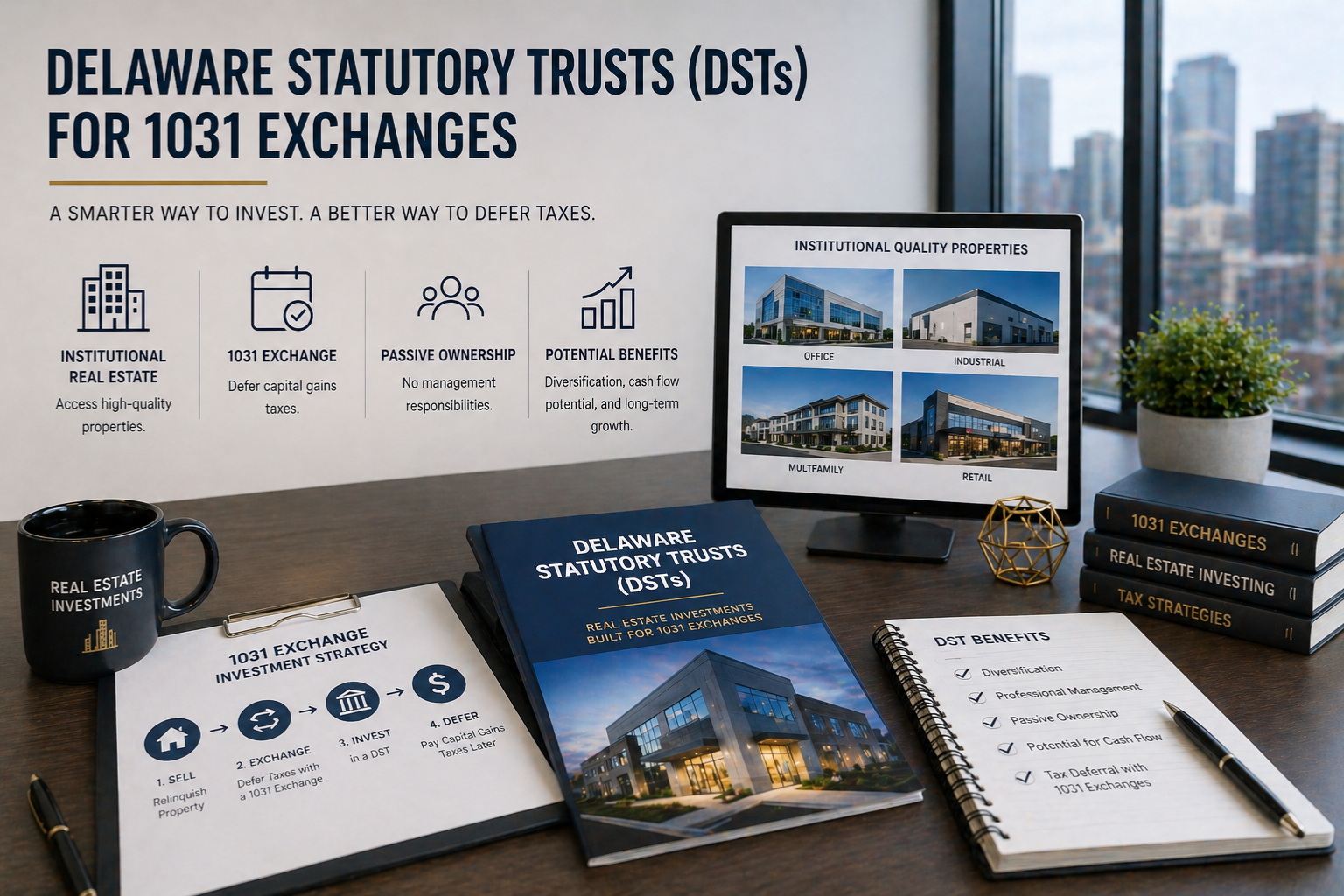
How DSTs Work in a 1031 Exchange
In a DST-based 1031 exchange, an investor sells a relinquished property and reinvests the proceeds into fractional ownership of a DST. The DST sponsor acquires and manages the underlying real estate, while investors receive proportional income and potential appreciation without direct management responsibilities.
This structure allows investors to complete a tax-deferred exchange while transitioning from active ownership to a passive investment model.
Benefits of DST Investments
Passive Ownership — No Management Responsibilities
DST investors are not responsible for property management, tenant issues, or operational decisions. The sponsor handles all day-to-day management.
Institutional-Grade Properties
DSTs typically invest in high-quality assets such as Class A multifamily communities, medical office buildings, and industrial properties that may be difficult for individual investors to access directly.
Diversification Across Property Types and Geographies
Investors can allocate capital across multiple DST offerings, spreading risk across different markets and property types.
Backup Identification for 1031 Exchanges
DSTs can be identified as backup properties to help investors meet the 45-day identification deadline, providing flexibility if primary acquisition targets fall through.
Owners of high-value horse farms and equestrian estates often explore Delaware Statutory Trust strategies after the sale of specialized Florida equestrian investment properties.
Risks and Limitations of DSTs
While DSTs offer significant benefits, they also come with important limitations:
- Illiquidity — no guaranteed secondary market
- No management control over the asset
- Sponsor risk — performance depends on the operator
- Fees and expense structures may reduce returns
- Typically long hold periods (5–10 years)
DST vs. Direct Property Ownership
| Feature | DST Investment | Direct Ownership |
|---|---|---|
| Management | Fully passive | Active involvement required |
| Control | No control | Full control |
| Liquidity | Low (5–10 year hold) | Moderate (can sell anytime) |
| Minimum Investment | $100K–$250K+ | Varies (typically higher capital required) |
| Diversification | High (multiple properties possible) | Limited to owned assets |
Who Should Consider a DST?
- Investors seeking passive income
- Retiring landlords tired of property management
- Investors under 1031 exchange time pressure
- Those looking to diversify into institutional real estate
How DontPayTax.com Helps with DST Investments
- Access to vetted DST offerings
- Coordination with qualified intermediaries
- Suitability and investment analysis
- Support across 43 states
- End-to-end 1031 exchange guidance
Frequently Asked Questions
Explore DST Options Today
Primary CTA:
Explore DST Options for Your 1031 Exchange
Secondary CTA:
Download Our DST Investment Guide