
Overview of Tax Strategies for Real Estate Investors
Real estate investors have multiple strategies available to reduce, defer, or eliminate taxes on profits. The right approach depends on your goals—whether that’s reinvestment, passive income, liquidity, or long-term wealth building. DontPayTax.com provides a comprehensive framework to help you evaluate and combine strategies effectively, including core tools like the 1031 exchange, cost segregation, and bonus depreciation.
Investors can also explore passive options such as Delaware Statutory Trusts (DSTs) or compare alternatives like Opportunity Zone investments to determine the best fit for their portfolio.
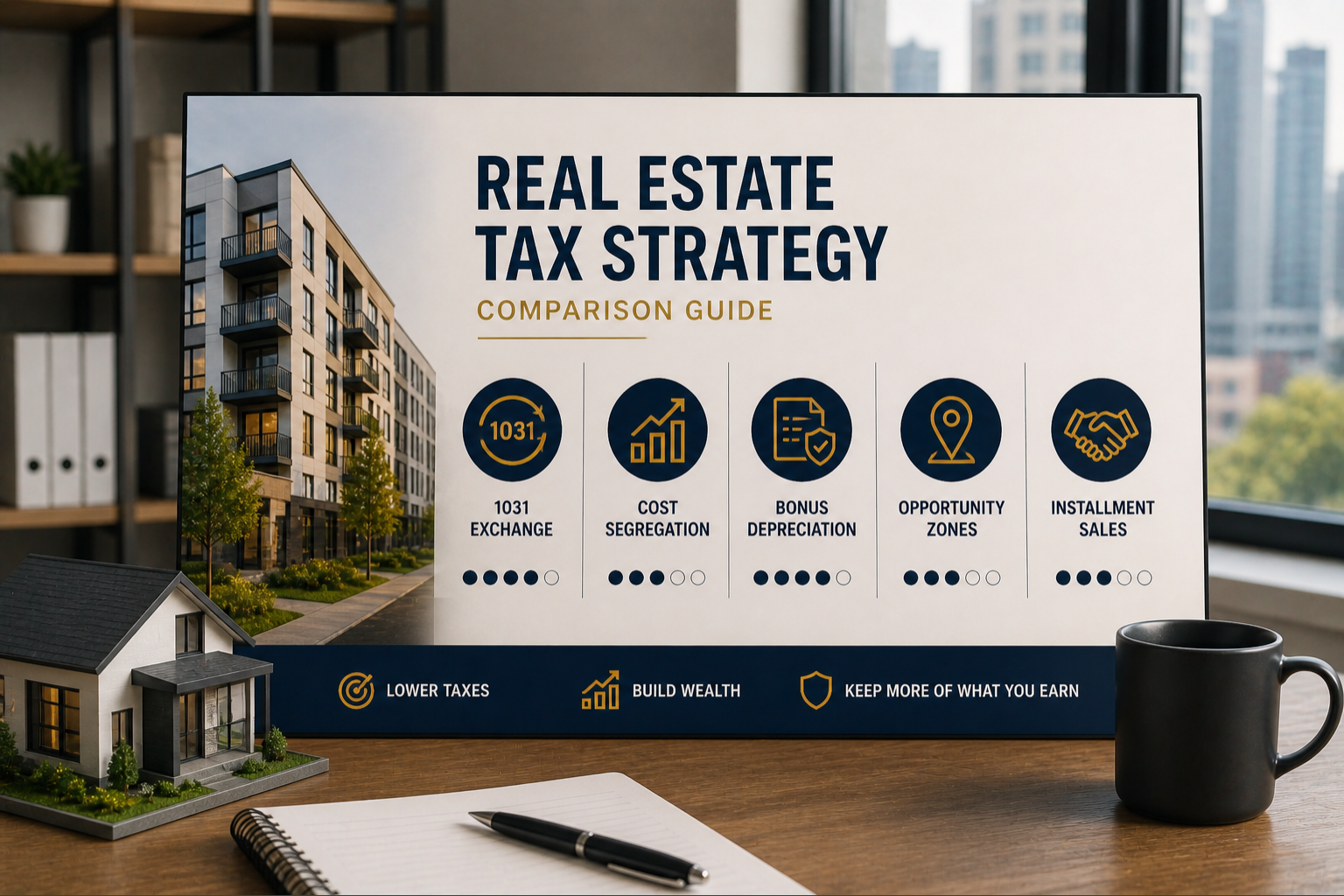
Side-by-Side Comparison of Real Estate Tax Strategies
| Strategy | Primary Tax Benefit | Eligible Assets | Timeline Requirements | Minimum Investment | Complexity | Best For |
|---|---|---|---|---|---|---|
| 1031 Exchange | Defers capital gains taxes | Real estate only | 45-day identify, 180-day close | Property dependent | High | Reinvestment and wealth growth |
| DST (Delaware Statutory Trust) | Passive 1031 exchange deferral | Fractional real estate | Follows 1031 timelines | $100K–$250K+ | Moderate | Passive income investors |
| Opportunity Zone | Deferral + tax-free appreciation after 10 years | Any capital gain | 180-day investment, 10-year hold | Flexible | Moderate | Long-term investors |
| Cost Segregation | Accelerated depreciation | Real estate | Immediate benefit | $500K+ property ideal | Moderate | Tax reduction and cash flow |
| Bonus Depreciation | Front-loaded deductions | Short-life property | Year placed in service | Property dependent | Low | High-income investors |
| Installment Sale | Spread tax over time | Any real estate | Based on payment terms | Flexible | Moderate | Income planning and retirement |
1031 Exchange — When to Use It
A 1031 exchange is ideal when you want to defer capital gains taxes while continuing to invest in real estate. It allows you to roll proceeds into new properties and compound wealth over time.
Delaware Statutory Trust — When to Use It
DSTs are best for investors who want passive ownership. They allow you to complete a 1031 exchange without managing property directly while still generating income.
Opportunity Zone — When to Use It
Opportunity Zones are ideal for investors with capital gains from any asset class who want long-term tax-free appreciation and are willing to commit to a 10-year hold.
Cost Segregation — When to Use It
Cost segregation is best used immediately after purchasing property to accelerate depreciation and reduce taxable income early in the investment lifecycle.
Bonus Depreciation — When to Use It
Bonus depreciation is most effective when combined with cost segregation, allowing you to maximize first-year deductions and improve cash flow.
Installment Sale — When to Use It
Installment sales are ideal when you want to sell property but spread tax liability over multiple years while generating steady income.
Combining Multiple Strategies
The most powerful tax outcomes often come from combining strategies. For example:
- 1031 exchange into a new property, followed by cost segregation and bonus depreciation
- Installment sale combined with Opportunity Zone investment
- DST investment paired with long-term passive income planning
Strategic layering allows investors to both defer and reduce taxes simultaneously.
Decision Framework: Which Strategy Is Right for You?
Use this simplified framework:
- Do you want to reinvest in real estate? → Consider a 1031 exchange
- Do you want passive income? → Consider a DST
- Do you want long-term tax-free growth? → Consider Opportunity Zones
- Do you want immediate tax savings? → Use cost segregation + bonus depreciation
- Do you want steady income and flexibility? → Consider an installment sale
Frequently Asked Questions
Get a Personalized Tax Strategy Recommendation
Primary CTA:
Get a Personalized Tax Strategy Recommendation — Free Consultation
Secondary CTA:
Download the Complete Tax Strategy Guide