
What Is a Build-to-Suit Exchange?
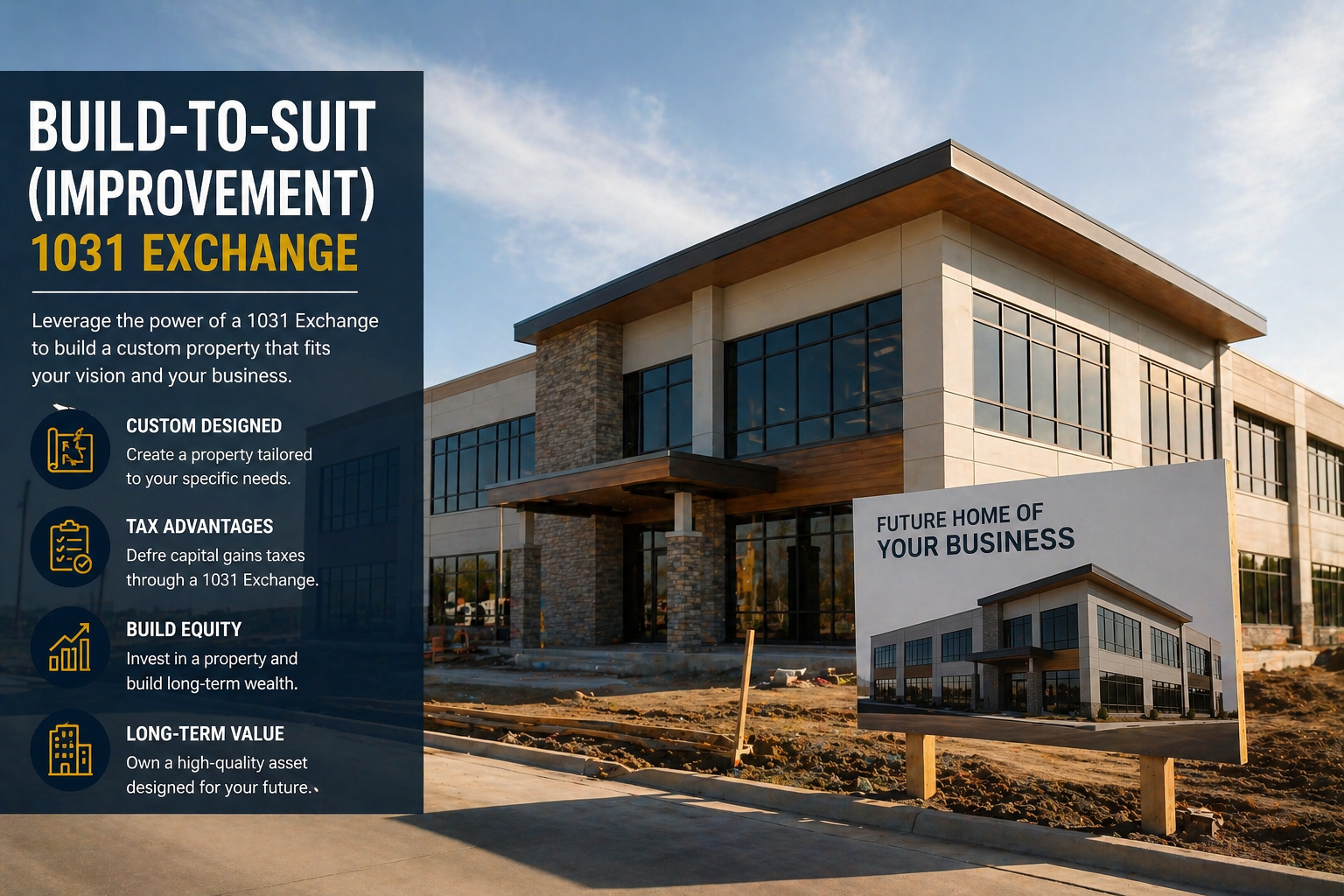
A build-to-suit 1031 exchange (also called an improvement exchange) allows investors to use 1031 exchange funds to construct or improve a replacement property. This strategy works within the broader 1031 exchange process, enabling investors to acquire custom-built or significantly upgraded real estate while deferring capital gains taxes.
Instead of purchasing a finished property, investors can reinvest proceeds into land or underperforming assets and enhance them—similar to strategies discussed in qualifying property types and reverse exchanges.
When structured properly, this approach can also be combined with cost segregation to accelerate depreciation and maximize tax efficiency, making it a powerful addition to a broader real estate tax strategy plan.
How a Build-to-Suit Exchange Works
A build-to-suit exchange requires a specialized structure to remain compliant:
- An Exchange Accommodation Titleholder (EAT) temporarily holds title to the replacement property
- Construction or improvements are completed while the EAT holds ownership
- The investor must identify the property within 45 days
- All improvements must be completed within 180 days
- The improved property is then transferred to the investor to complete the exchange
Build-to-Suit Exchange Rules
The 180-Day Construction Window
All construction and improvements must be completed within the 180-day exchange period. This timeline is strict and includes weekends and holidays.
Exchange Accommodation Titleholder (EAT) Requirement
The investor cannot take title to the property during construction. The EAT must hold ownership until improvements are complete and the exchange is finalized.
Value Requirements — Improvements Must Be Complete at Transfer
Only improvements that are fully completed and in place at the time of transfer count toward the exchange value. Any unfinished construction may result in taxable “boot.”
When to Use a Build-to-Suit Exchange
- Developing a custom commercial or industrial facility
- Purchasing land and constructing a new property
- Executing a value-add strategy on an underperforming asset
- Upgrading a property to meet specific operational needs
Build-to-Suit vs. Standard 1031 Exchange
| Feature | Build-to-Suit Exchange | Standard 1031 Exchange |
|---|---|---|
| Use of Funds | Purchase + construction/improvements | Purchase only |
| Ownership During Process | EAT holds title | Investor acquires directly |
| Timeline Complexity | High | Moderate |
| Flexibility | Custom-built property | Existing properties only |
| Cost | Higher ($10K–$25K+ additional) | Lower |
Common Build-to-Suit Exchange Mistakes
- Underestimating construction timelines
- Failing to complete improvements within 180 days
- Budget overruns that reduce reinvestment value
- Incorrect ownership structure during construction
- Not planning the exchange before starting the project
Frequently Asked Questions
Plan Your Build-to-Suit Exchange Today
Plan Your Build-to-Suit Exchange — Free Consultation
Read the Complete 1031 Exchange Guide