
A 1031 exchange can be one of the most powerful tools for deferring capital gains taxes—but it is also highly regulated. Even small mistakes can disqualify the entire exchange, resulting in immediate tax liability. Understanding the rules around qualifying properties and proper structuring is critical to success.
Investors often run into issues that are avoidable with proper planning or by comparing strategies in the real estate tax strategy comparison guide. In some cases, alternative approaches such as reverse exchanges or backup options like DST investments can help mitigate risk and keep the exchange on track. Below are the most common 1031 exchange mistakes and how to avoid them.
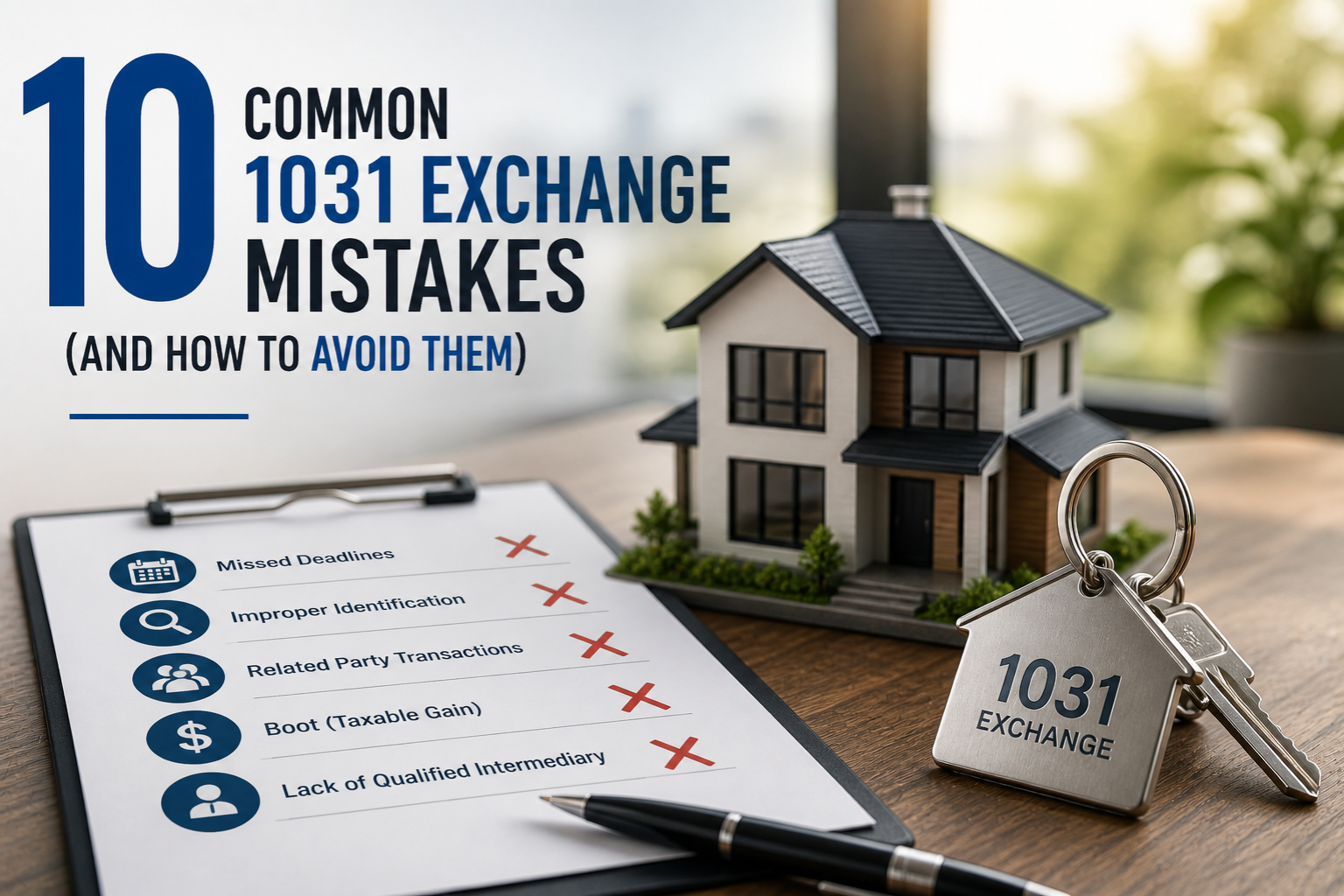
Mistake #1: Missing the 45-Day Identification Deadline
You must identify replacement properties within 45 calendar days of selling your relinquished property. This deadline is strict and cannot be extended under normal circumstances.
How to avoid it: Start searching for replacement properties before closing your sale and prepare a backup list.
Mistake #2: Missing the 180-Day Closing Deadline
You must close on your replacement property within 180 days of selling your original property. Missing this deadline causes the exchange to fail.
How to avoid it: Work with experienced professionals and line up financing early.
Mistake #3: Taking Constructive Receipt of Funds
If you receive or control the sale proceeds—even briefly—the exchange is disqualified. This is known as constructive receipt.
How to avoid it: Always use a Qualified Intermediary (QI) to hold funds.
Mistake #4: Using a Disqualified Person as Your QI
Your QI cannot be your agent, attorney, accountant, or anyone who has provided services to you within the past two years.
How to avoid it: Use an independent, experienced Qualified Intermediary.
Mistake #5: Receiving Boot Without Planning
Boot is any non-like-kind property received in an exchange, including cash, debt reduction, or personal property. Boot is taxable even if the rest of the exchange is valid.
How to avoid it: Reinvest all proceeds and match or exceed your debt level.
Mistake #6: Exchanging Into a Primary Residence
1031 exchanges apply only to investment or business-use properties—not personal residences.
How to avoid it: Ensure the replacement property is intended for investment use.
Mistake #7: Ignoring State Tax Implications
While federal taxes may be deferred, some states track deferred gains and impose taxes later.
How to avoid it: Understand multi-state tax rules before completing your exchange.
Mistake #8: Related Party Exchanges Without Proper Holding Period
Exchanges involving related parties are heavily scrutinized and may be disqualified if the property is not held long enough.
How to avoid it: Follow IRS guidelines and maintain proper holding periods.
Mistake #9: Inadequate Documentation
Missing or incorrect paperwork can invalidate the exchange.
How to avoid it: Maintain detailed documentation and work with professionals who specialize in 1031 exchanges.
Mistake #10: Not Planning the Exchange Before Listing
Many investors wait until after selling to think about a 1031 exchange, which leads to rushed decisions and missed deadlines.
How to avoid it: Plan your exchange strategy before listing your property.
How DontPayTax.com Prevents These Mistakes
- End-to-end exchange coordination
- Qualified Intermediary vetting
- Deadline tracking and compliance monitoring
- Strategic planning before property sale
- Access to replacement property opportunities
Frequently Asked Questions
Avoid Costly Mistakes Today
Primary CTA:
Avoid Costly Mistakes — Get Expert 1031 Exchange Guidance
Secondary CTA:
Download Our 1031 Exchange Compliance Checklist